

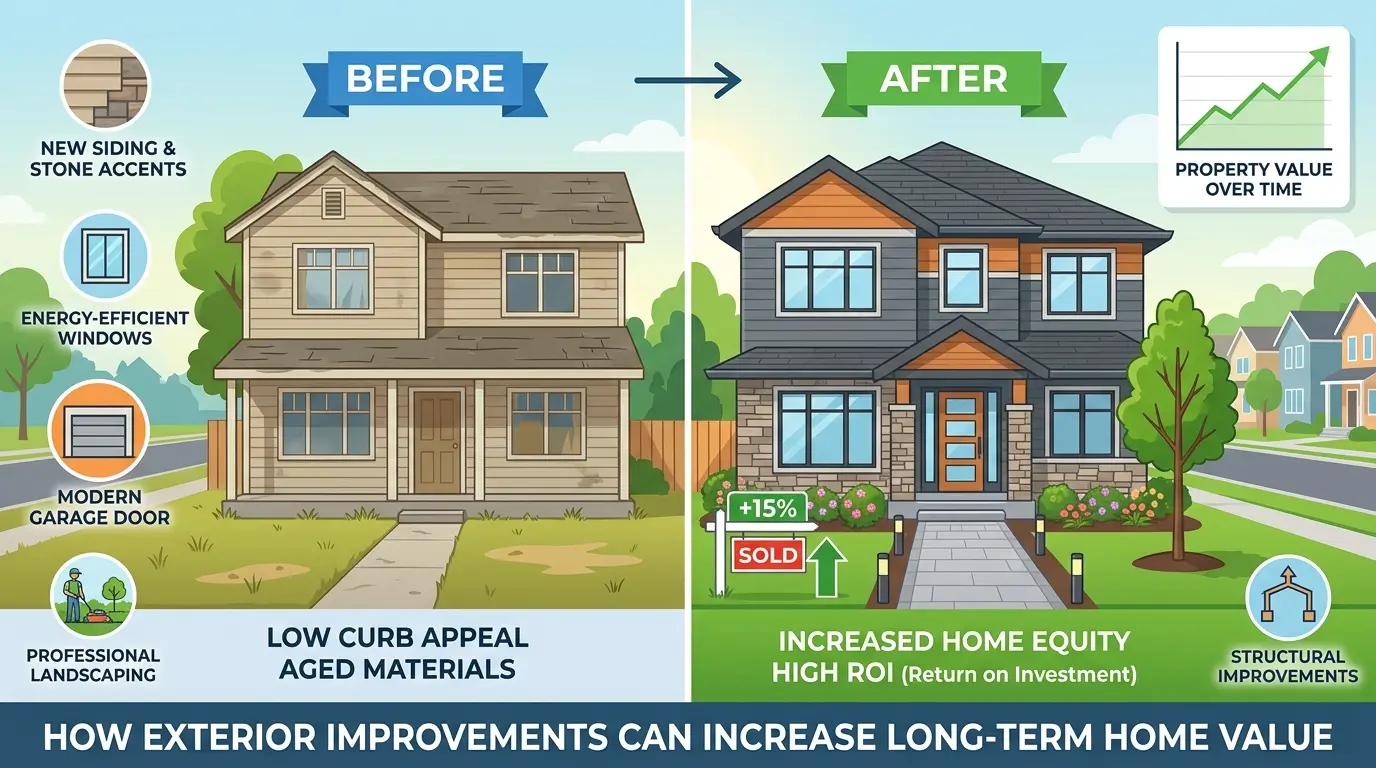
Homeowners often focus on interior upgrades when thinking about property improvements, but the exterior of a home plays an equally important role in both appearance and long-term value. From roofing systems to siding and drainage, exterior features help protect the structure while shaping first impressions.
A well-maintained exterior can improve curb appeal, reduce maintenance costs, and help preserve a property against weather-related wear. In many cases, strategic exterior improvements also contribute to better energy efficiency and stronger resale potential.
As housing markets continue evolving, homeowners are paying closer attention to upgrades that offer practical benefits in addition to visual improvements.
First Impressions Matter More Than Ever
The outside of a home creates an immediate impression before anyone steps through the front door. Whether someone is visiting socially or evaluating the property as a potential buyer, the condition of the exterior strongly influences perception.
A clean, updated exterior suggests that the home has been cared for properly over time. On the other hand, visible wear such as damaged roofing, peeling paint, sagging gutters, or deteriorating siding may raise concerns about hidden maintenance issues.
Even relatively modest improvements can make a noticeable difference, including:
- Replacing worn roofing materials
- Updating gutters and drainage systems
- Repairing damaged siding
- Improving landscaping
- Refreshing trim and fascia
- Cleaning exterior surfaces
These updates not only improve appearance but also help prevent larger structural problems from developing later.
Roofing Plays a Central Role in Home Protection
Among all exterior systems, the roof remains one of the most critical. It serves as the first line of defense against rain, wind, heat, and debris while supporting insulation and ventilation throughout the home.
Because roofs endure constant exposure to changing weather conditions, they naturally experience wear over time. Without proper maintenance, small vulnerabilities can gradually evolve into more serious issues.
Common signs of roofing deterioration include:
Missing or Damaged Shingles
Shingles may loosen, crack, or curl due to age and weather exposure.
Water Stains Indoors
Discoloration on ceilings or walls can indicate hidden leaks above.
Poor Drainage
Clogged or damaged gutters may allow water to collect near vulnerable areas.
Increased Energy Costs
A failing roof or poor attic ventilation can affect indoor temperature control.
Many homeowners delay roof repairs until visible leaks appear, but preventative maintenance is often more cost-effective than emergency restoration work.
Weather Exposure Creates Ongoing Stress
Exterior systems face constant environmental pressure throughout the year. Heat, humidity, heavy rainfall, strong winds, and temperature changes all contribute to material deterioration over time.
For example, prolonged moisture exposure may weaken roofing components or encourage mold growth beneath siding. Wind can loosen shingles or flashing, while intense sunlight may accelerate fading and cracking.
Seasonal weather patterns can also impact different parts of the home in interconnected ways. A damaged roof may lead to attic moisture buildup, while failing gutters can direct water toward foundations or landscaping.
Regular inspections help identify these issues before they escalate into more expensive repairs.
Exterior Upgrades Can Improve Energy Efficiency
Modern exterior improvements increasingly focus on energy performance as well as appearance. Roofing systems, insulation, siding materials, and ventilation all influence how efficiently a home regulates indoor temperatures.
A poorly insulated or improperly ventilated attic may trap heat during warm months, causing HVAC systems to work harder. Likewise, gaps around exterior materials can allow conditioned air to escape.
Some energy-conscious exterior upgrades include:
- Reflective roofing materials
- Improved attic ventilation
- Modern siding systems
- Enhanced insulation barriers
- Updated windows and sealing systems
These improvements can help reduce utility expenses while creating a more comfortable living environment throughout the year.
Maintenance Is Often More Affordable Than Major Repairs
One of the biggest misconceptions homeowners have is assuming exterior maintenance can always wait. In reality, neglecting small problems often results in significantly higher costs later.
For example, a minor roof leak may initially require only a simple repair. If ignored, however, moisture can spread into insulation, drywall, framing, and flooring. What started as a manageable issue may eventually require extensive restoration work.
Routine maintenance helps extend the lifespan of exterior systems while reducing the likelihood of emergency repairs.
Important maintenance tasks often include:
- Cleaning gutters regularly
- Inspecting roofs after major storms
- Checking for siding cracks or gaps
- Monitoring attic ventilation
- Addressing water drainage concerns
- Replacing worn sealants around penetrations
Preventative care allows homeowners to catch vulnerabilities early before they become disruptive or costly.
Professional Assessments Provide Valuable Insight
Because many exterior issues develop gradually, homeowners may not always recognize warning signs immediately. Professional inspections can provide a clearer understanding of a property’s current condition and future maintenance needs.
Experienced contractors often evaluate:
- Roofing lifespan
- Ventilation performance
- Flashing integrity
- Drainage efficiency
- Structural concerns
- Material wear patterns
These assessments help homeowners prioritize repairs and plan upgrades strategically rather than reacting only when emergencies occur.
Those seeking additional information about roofing systems, exterior maintenance, and property protection strategies may review resources available through https://idealroofingandexteriors.com for broader context on residential exterior care.
Exterior Improvements Support Long-Term Property Value
Homeownership involves balancing immediate needs with long-term investment considerations. Exterior upgrades often deliver value in several ways simultaneously by improving durability, reducing maintenance risks, and enhancing overall appearance.
Potential buyers frequently view updated roofing and exterior systems as indicators of responsible property care. Knowing major components have been maintained or recently upgraded may provide added confidence during the purchasing process.
Even for homeowners who are not planning to sell anytime soon, preserving exterior systems contributes to safer, more efficient, and more comfortable living conditions over time.
Conclusion
Exterior maintenance is about far more than aesthetics alone. Roofing systems, siding, drainage, and ventilation all work together to protect a home from environmental damage while supporting energy efficiency and long-term structural integrity.
By addressing small issues early and investing in preventative care, homeowners can often avoid larger repairs and preserve the value of their property more effectively. A proactive approach to exterior upkeep not only protects the home itself but also helps create lasting peace of mind for years to come.
