

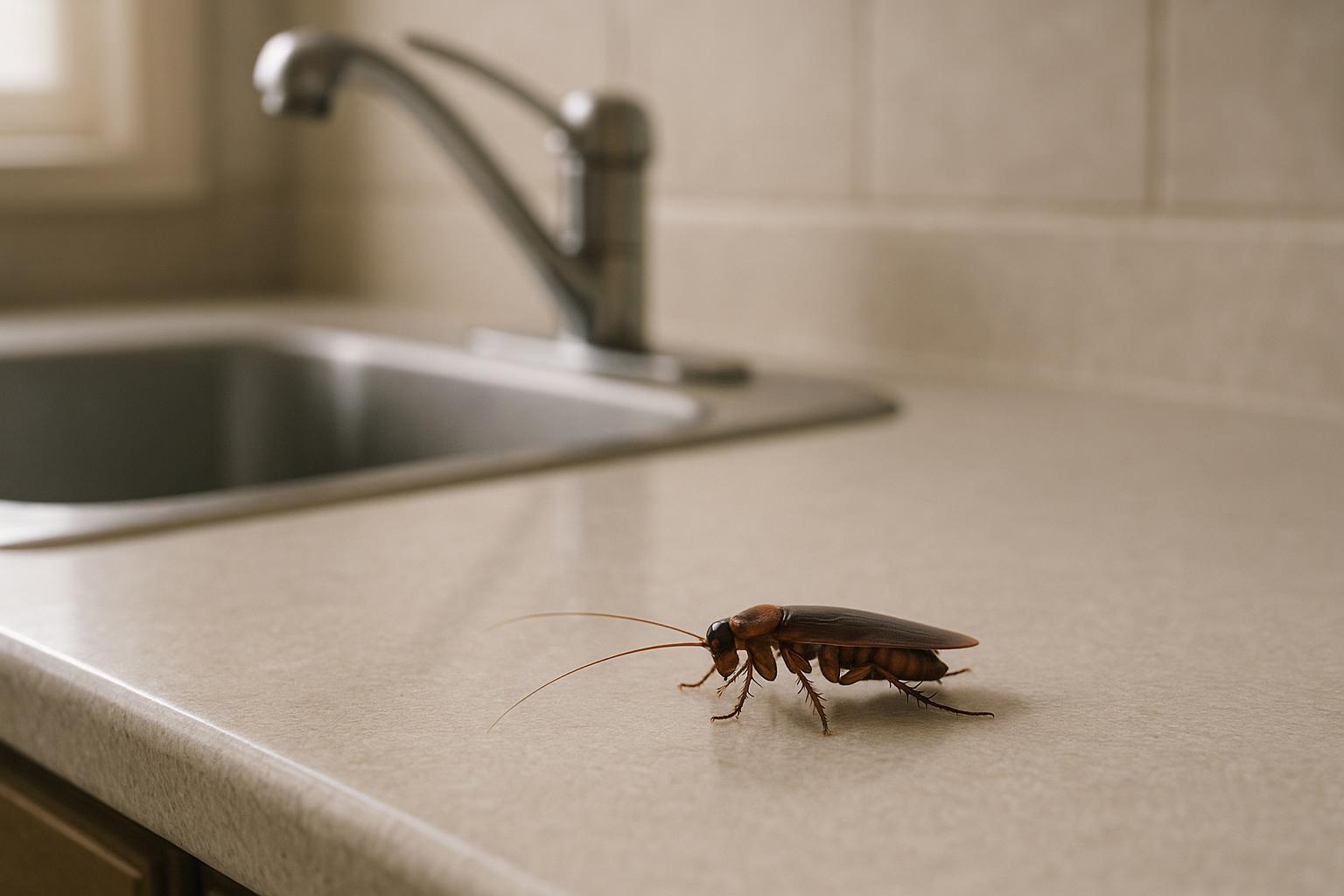
A kitchen can look spotless on the surface, yet cockroaches may still keep appearing at night. Benchtops are wiped down, dishes are washed, rubbish is removed, and cupboards seem organised, but the problem continues. This can be confusing and frustrating for homeowners who assume cleanliness alone should be enough to keep cockroaches away.
The reality is that cockroaches do not need a visibly dirty kitchen to survive. They are highly adaptable pests that can live on tiny food residues, moisture from hidden leaks, and sheltered spaces that are rarely disturbed. When these conditions remain available, cockroaches can continue breeding and returning even in a kitchen that appears clean every day.
Why Clean Kitchens Still Attract Cockroaches
A clean kitchen reduces the amount of food available to cockroaches, but it does not remove every source of nourishment. Small crumbs behind appliances, grease around cooktops, food residue in drains, and unsealed pantry items can be enough to support hidden activity. Cockroaches can also feed on cardboard, glue, soap residue, pet food, and organic debris that may not be obvious during normal cleaning.
Moisture is another major reason cockroaches remain active in clean homes. A slow leak under the sink, condensation behind the dishwasher, dripping pipes, or damp areas around drains can provide a reliable water source. Cockroaches are drawn to warm, dark, and humid spaces, especially when food and water are close together.
This is why surface cleaning alone may not solve the issue. A kitchen may look hygienic, while hidden areas behind cabinetry, appliances, and plumbing fixtures continue to support an infestation.
Where Cockroaches Hide in Clean Homes
Cockroaches prefer tight, dark spaces where they can remain undisturbed during the day. In kitchens, common hiding places include behind refrigerators, under dishwashers, around oven motors, inside cupboard hinges, and beneath sink cabinets. These areas can remain warm and slightly damp, making them ideal for nesting and breeding.
Drains are another common concern. Food particles, grease, and moisture can collect inside or around drain systems, particularly if the plumbing is rarely cleaned beyond the visible sink surface. Cockroaches may also travel through gaps around pipes, drains, and utility lines.
Wall gaps and cracks around cabinetry can provide hidden pathways between rooms. In apartment buildings, cockroaches may move through shared plumbing lines, wall cavities, and service areas from nearby properties. This means one clean kitchen can still experience activity if the wider building has an untreated infestation.
Why They Keep Returning
Cockroaches reproduce quickly, which means a small hidden population can become a larger infestation in a short period. If egg cases, nymphs, or nesting areas are missed, the problem may appear to improve temporarily before returning again.
Cleaning may remove visible signs of activity, but it does not necessarily reach the places where cockroaches gather. Spraying only the areas where cockroaches are seen can also be ineffective because most of the population remains hidden in cracks, voids, and appliance spaces.
Cockroaches are primarily active at night, so daytime cleaning may not reveal the full scale of the issue. Seeing cockroaches during the day can sometimes indicate that the hidden population has become crowded enough to force them out of their usual hiding places.
Recurring activity can also happen when food, moisture, shelter, and entry points remain available. Unless all of these conditions are addressed, cockroaches can continue to establish themselves in the same kitchen.
Risks of Ignoring the Issue
A recurring cockroach problem should not be ignored simply because the kitchen looks clean. Cockroaches can spread from hidden areas into cupboards, pantry spaces, food storage containers, and nearby rooms. They may contaminate surfaces and stored food as they move through the home.
Cockroaches are also associated with bacteria, fungi, parasites, and allergens. Their droppings, shed skins, and saliva can worsen indoor hygiene concerns, particularly in homes with children, older residents, or people with respiratory sensitivities.
The longer an infestation continues, the more likely it is to spread into wall cavities, bathrooms, laundry areas, and storage spaces. Addressing the issue early can help limit the need for more extensive treatment later.
Professional Treatment Approach
When cockroaches continue returning despite regular cleaning, the focus needs to shift from visible insects to the hidden source of the problem. A targeted cockroach pest control service can identify likely harbourage areas, breeding zones, moisture sources, and access points that are not obvious during routine household cleaning.
Professional treatment commonly involves inspecting behind appliances, inside cupboards, around plumbing connections, and within cracks or gaps where cockroaches may be nesting. Depending on the level of activity, treatment may include carefully placed baits, monitoring methods, and follow-up inspections to address newly emerging cockroaches.
A complete approach is important because cockroaches can avoid exposed treatment areas by remaining inside protected spaces. Treating the source, rather than only the insects that are seen, is what helps break the breeding cycle.
Prevention After Treatment
Prevention after treatment is essential for reducing the risk of reinfestation. Food should be stored in sealed containers, rubbish should be removed regularly, and pet food should not be left out overnight. Crumbs and grease should be cleaned from hard-to-reach areas, including around appliances and inside cupboard corners.
Leaks should be repaired promptly, particularly beneath sinks and behind dishwashers. Keeping the kitchen dry overnight can reduce the moisture cockroaches rely on. It is also helpful to seal cracks around pipes, wall gaps, cupboard edges, and utility penetrations.
Cardboard boxes and unnecessary clutter should be removed from kitchen storage areas because they can provide a hidden shelter. In apartments or attached homes, recurring cockroach activity may require broader attention to shared walls, plumbing systems, or neighbouring units.
When Cleaning Is Not Enough
A clean kitchen is an important part of prevention, but it cannot always remove an established infestation. When cockroaches keep returning, there is usually a hidden food source, moisture issue, nesting area, or entry point that needs to be addressed.
If activity continues despite regular cleaning, professional Pest Control services may be needed to identify the source, treat breeding areas, and help prevent the infestation from continuing.
FAQs
Why do cockroaches appear in a clean kitchen?
Cockroaches can survive on very small food residues, hidden grease, moisture, and sheltered spaces. A clean kitchen may still have leaks, cracks, appliance gaps, or drain areas that support activity.
Can cockroaches live behind kitchen appliances?
Yes. Refrigerators, dishwashers, ovens, and microwaves can provide warmth, darkness, crumbs, and moisture, making them common hiding places.
Do cockroaches come through drains?
Cockroaches can travel around drains and plumbing gaps, particularly where moisture and organic residue are present. They may also enter through openings around pipes.
Why do cockroaches return after spraying?
Spraying visible cockroaches may not reach nests, egg cases, or hidden breeding areas. If the underlying conditions remain, new cockroaches can continue emerging.
Are cockroaches dangerous in food storage areas?
Cockroaches can contaminate food packaging, cupboards, and kitchen surfaces. They may also carry bacteria and allergens that create hygiene concerns.
How can I stop cockroaches from returning?
Keep food sealed, repair leaks, remove clutter, clean hidden areas, seal cracks, and address infestations with targeted treatment when necessary.