

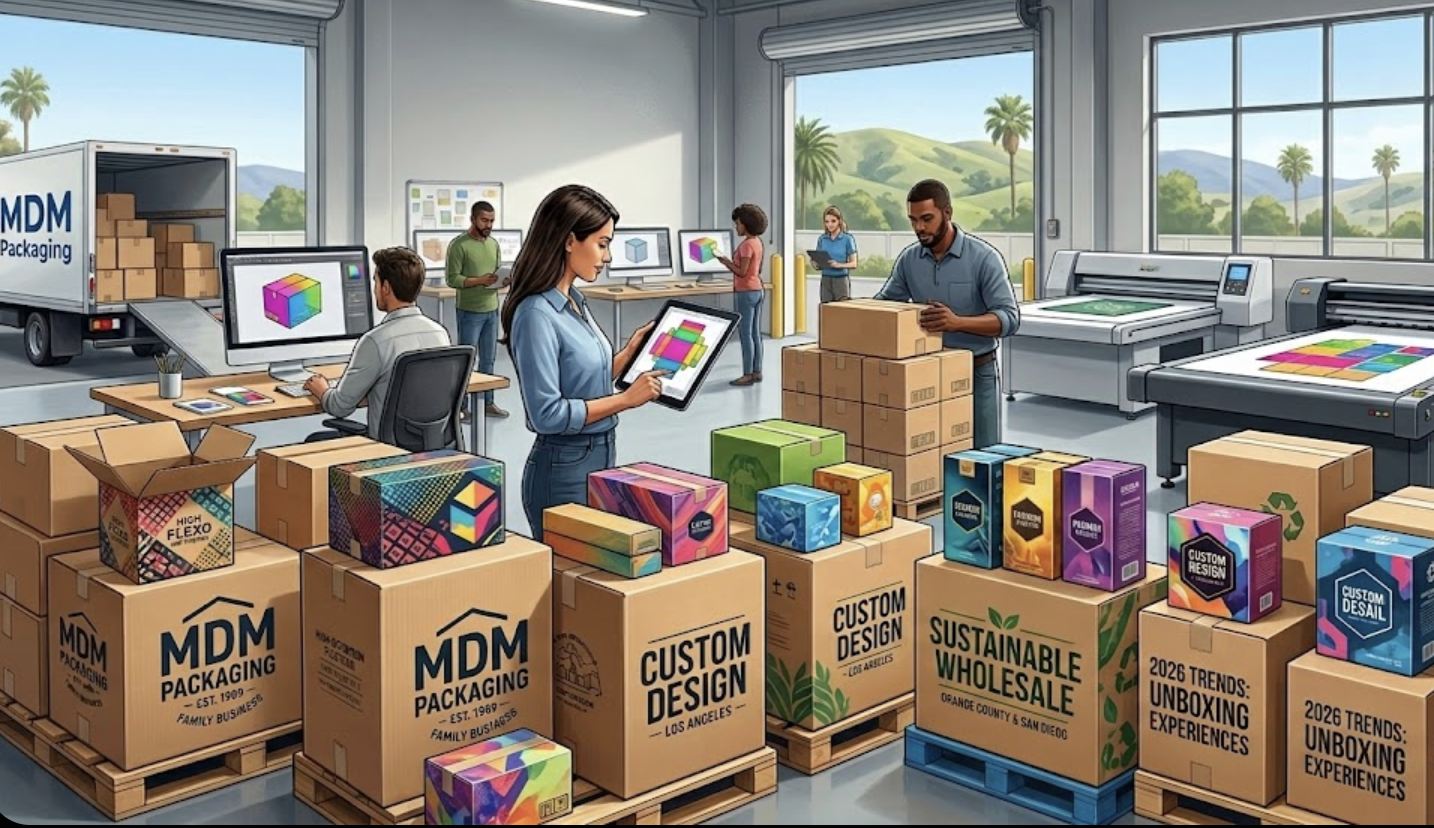
Finding the right packaging supplier can have a direct impact on how efficiently a company manufactures, stores, protects, and ships its products. For businesses throughout California, packaging is more than a final step before an order leaves the warehouse. It is an essential part of the supply chain.
A dependable packaging supplier helps businesses source the materials they need while also addressing practical challenges such as product protection, packaging costs, storage space, shipping efficiency, and material availability.
From corrugated boxes and custom foam to wood crates, protective packaging, stretch film, tape, and specialty materials, California businesses rely on packaging suppliers for a wide range of products.
However, not every packaging supplier offers the same level of service or expertise. Companies that manufacture or distribute products often need a partner that understands their operation rather than a vendor that simply fills orders.
What Does a Packaging Supplier Do?
A packaging supplier provides businesses with materials used to protect, contain, store, handle, and transport products.
Basic packaging supplies can include:
- Corrugated boxes
- Custom boxes
- Packaging tape
- Stretch film
- Shrink film
- Poly bags
- Bubble and cushioning materials
- Foam packaging
- Labels
- Pallets
- Wood crates
- Protective wraps
- Shipping supplies
Full-service packaging suppliers may go considerably further.
They can evaluate an existing packaging process, develop custom packaging, manufacture foam inserts, design corrugated containers, create custom crates, maintain packaging inventory, and coordinate recurring deliveries.
For manufacturers, these additional capabilities can make a packaging supplier an important extension of the production and logistics operation.
Why Businesses Search for a Local Packaging Supplier
Searching for a packaging supplier near a manufacturing or distribution facility can provide practical advantages.
Packaging is often purchased repeatedly and in significant quantities. Freight costs, delivery schedules, inventory availability, and lead times can therefore influence the overall cost of a packaging program.
Working with a California packaging supplier can make it easier for businesses in the state to coordinate deliveries and communicate about changing requirements.
Local service becomes particularly valuable when a company needs custom packaging.
A packaging specialist may need to inspect a product, review an existing package, examine damage, measure equipment, or discuss how employees currently prepare shipments.
These conversations are easier when the packaging supplier understands the local manufacturing environment and can work directly with the customer.
Custom Packaging Can Improve Product Protection
Standard packaging works well for many applications. Other products need something specifically designed around them.
Custom packaging allows a business to create a package based on the actual dimensions, weight, fragility, value, and transportation requirements of the product.
Consider a manufacturer shipping a precision component.
Placing the component inside an oversized stock box may require substantial cushioning. Employees may also pack each shipment differently.
A custom box and foam insert can create a repeatable packaging process. The foam positions the component correctly, while the outer container provides structural protection.
This type of solution can improve product protection while making packaging easier for employees.
A capable packaging supplier can evaluate the entire system rather than treating the box, foam, tape, and cushioning as unrelated products.
Corrugated Boxes for Commercial and Industrial Applications
Corrugated packaging remains one of the most common products supplied to California businesses.
Its versatility makes corrugated material suitable for everything from small consumer products to heavy industrial components.
Packaging suppliers can provide standard stock boxes for common applications as well as custom corrugated boxes for products requiring specific dimensions or configurations.
Custom corrugated packaging may include partitions, dividers, trays, pads, inserts, die-cut components, or printed designs.
Selecting the appropriate dimensions can also help businesses control shipping costs.
An unnecessarily large box consumes more material and often requires additional cushioning. It also takes up more space on pallets, trucks, and warehouse shelves.
Right-sizing the package can reduce these inefficiencies while maintaining appropriate product protection.
Foam Packaging for Fragile and High-Value Products
Custom foam packaging provides another level of protection for products that cannot move freely inside a container.
Packaging suppliers can fabricate foam into inserts, end caps, pads, trays, and other configurations.
The objective is to control movement and protect vulnerable areas of the product.
Foam packaging can support applications involving electronics, medical equipment, aerospace components, automotive parts, tools, instruments, and industrial products.
The design process should consider more than product dimensions. Weight, fragility, transportation conditions, and expected handling can influence the type and amount of foam required.
An experienced packaging supplier can help determine which materials make sense for the application instead of simply adding more cushioning.
Industrial Packaging for Manufacturers
Manufacturing companies often have very different packaging requirements from retail or e-commerce businesses.
Industrial products can be large, heavy, irregularly shaped, expensive, or sensitive to environmental conditions.
These characteristics may require a combination of packaging materials.
For example, an industrial shipment could use a protective wrap around the product, fabricated foam for cushioning, a barrier material for additional protection, and a custom wood crate for transportation.
This is why manufacturers often benefit from working with an industrial packaging supplier capable of providing multiple solutions.
Managing the complete application through one packaging company can also reduce the number of vendors involved in the process.
Custom Crates for Heavy Equipment
Some products simply cannot be shipped safely in conventional corrugated packaging.
Machinery, aerospace equipment, industrial components, electronics, and other heavy or high-value products may require custom wood crating.
A packaging supplier with crating capabilities can design the crate around the product and shipping method.
The design may incorporate blocking and bracing to restrict movement during transportation. Depending on the application, additional materials can protect the product from shock, vibration, moisture, dust, or other environmental conditions.
Businesses shipping internationally may also need to consider requirements associated with wood packaging used in global transportation.
Protective Packaging Materials
Not every packaging challenge requires a completely custom solution.
Packaging suppliers also provide the everyday protective materials businesses use throughout production and shipping.
Stretch film can secure palletized loads. Tape closes corrugated cartons. Poly bags protect components from dust and contamination. Cushioning materials fill empty spaces. Protective wraps help shield surfaces during handling.
These materials may appear simple, but selecting the correct product can affect efficiency.
Using the wrong tape, for example, may result in cartons opening during transportation. Using excessive stretch film increases material consumption. Oversized bags or cushioning products create unnecessary waste.
A knowledgeable packaging supplier can help businesses match materials to the actual application.
Packaging Suppliers Can Help Control Inventory
Packaging inventory presents an interesting challenge.
Businesses need enough material to avoid shortages, but storing excessive packaging consumes valuable warehouse space.
Corrugated boxes are a good example. A large quantity of assembled or knocked-down boxes can occupy significant storage space.
Some packaging suppliers offer inventory management, stocking, or scheduled delivery programs that help customers maintain appropriate material levels.
Instead of ordering large quantities whenever inventory becomes low, companies can develop more predictable purchasing and delivery schedules.
This can help manufacturing and distribution operations reduce emergency orders while keeping critical packaging materials available.
What Makes a Good Packaging Supplier?
Price matters, but it should not be the only consideration when selecting a packaging company.
Businesses should also evaluate reliability, product quality, lead times, communication, custom capabilities, technical knowledge, and delivery performance.
A strong packaging supplier should understand what the customer is trying to accomplish.
If products repeatedly arrive damaged, the supplier should investigate why.
If employees spend too much time packing a product, there may be an opportunity to simplify the package.
If a company stores months of packaging inventory, a better purchasing or stocking program may reduce warehouse requirements.
The supplier should look for practical improvements rather than simply recommending additional materials.
Finding a Packaging Supplier in California
California businesses can choose from numerous packaging companies, distributors, manufacturers, and specialty suppliers.
The right choice depends largely on the application.
Companies that only need standard shipping supplies may prioritize product availability and competitive pricing. Manufacturers with complex products may place greater importance on custom packaging design, foam fabrication, crating, protective materials, and inventory management.
Businesses should also consider whether the packaging supplier can support future growth.
Packaging requirements often become more complicated as a company introduces products, expands production, enters new markets, or increases shipping volume.
Working with a supplier that offers both standard packaging supplies and custom solutions can reduce the need to search for another vendor every time requirements change.
Build a Better Relationship With Your Packaging Supplier
The strongest packaging supplier relationships develop when both companies understand the bigger picture.
Instead of purchasing each box, roll of tape, piece of foam, or crate as an isolated item, businesses can evaluate packaging as a complete system.
That approach creates opportunities to improve protection, reduce unnecessary materials, simplify packing, manage inventory, and control costs.
For California manufacturers, distributors, and growing businesses, choosing the right packaging supplier can support far more than shipping.
A knowledgeable California packaging supplier can help keep production moving, products protected, packaging inventory available, and shipments prepared for the journey ahead.
When packaging works correctly, customers may never think about it.
For the business shipping the product, that is exactly the point.
