

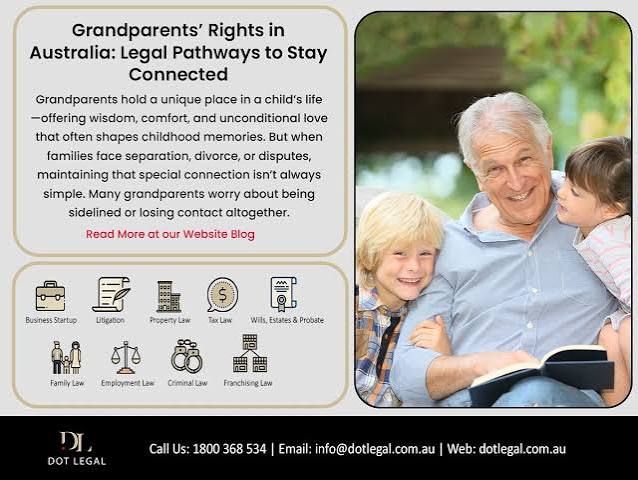
Family relationships can become complicated when parents separate, divorce or experience ongoing disagreements about their children. In these situations, grandparents may worry about losing contact with grandchildren they have helped raise or supported throughout their lives. At the same time, parents generally have primary responsibility for making decisions about their children’s care, upbringing and wellbeing.
Understanding the difference between grandparents’ interests and parental responsibility is important when family disputes arise. Australian family law recognises the value of children’s relationships with their extended family, including grandparents, while placing the child’s best interests at the centre of parenting decisions.
The law does not automatically give grandparents the same decision-making authority as parents. However, grandparents may have legal options to seek time or communication with their grandchildren in appropriate circumstances. Knowing how these options work can help families understand their position and consider constructive ways to resolve disagreements.
Understanding Parental Responsibility Under Australian Family Law
Parental responsibility generally refers to the duties, powers and responsibilities parents have in relation to their children. It concerns decisions about a child’s upbringing, including education, healthcare and other important matters.
Under Australian family law, parental responsibility and the arrangements for a child to spend time with particular people are separate issues. A person may have an important relationship with a child without automatically having authority to make major decisions on that child’s behalf.
Following separation or divorce, parents may need to establish arrangements that address where their children live, how they spend time with each parent and how significant decisions are made. These arrangements should reflect the child’s individual circumstances and best interests.
Grandparents do not automatically acquire parental responsibility simply because they are closely involved in a grandchild’s life. Their legal position depends on the circumstances, any existing court orders and the type of arrangement being sought.
Do Grandparents Have a Legal Right to See Their Grandchildren?
Grandparents can seek arrangements to spend time or communicate with their grandchildren, but this does not mean they have an unconditional right to contact. The child’s best interests are the central consideration when parenting arrangements are determined under Australian family law.
A grandparent may have played a significant role in providing emotional support, caring for a child or maintaining family connections. These relationships can be relevant when considering whether ongoing contact would benefit the child.
However, a court will not necessarily order contact simply because a grandparent requests it. The circumstances surrounding the dispute, the child’s needs, the nature of the existing relationship and any safety concerns may all be relevant.
Families may be able to resolve disagreements through respectful communication or family dispute resolution. Where an agreement cannot be reached, legal advice can help grandparents understand whether a court application is appropriate and what factors may affect the outcome.
How Divorce Can Affect Grandparents’ Contact With Children
When parents divorce or separate, family relationships may change significantly. Grandparents who previously saw their grandchildren regularly may find that contact becomes less frequent, particularly when family disagreements develop or parents move to different locations.
Separation does not automatically remove the importance of a grandparent’s relationship with a child. Australian family law allows grandparents to apply for parenting orders, including orders about spending time with or communicating with a grandchild. However, an application does not guarantee that the court will make the requested order. The child’s best interests remain the primary consideration.
Grandparents rights After Divorce in Sydney may depend on several factors, including the history of the relationship, the child’s emotional needs, the parents’ circumstances and any safety concerns. The court considers the individual circumstances rather than automatically favouring one family member.
Grandparents should also understand that they cannot simply disregard existing parenting orders or make arrangements contrary to those orders. Obtaining legal advice can help clarify the available options and the appropriate steps to take.
What Factors Can a Court Consider?
When deciding whether to make parenting orders, a court must focus on the child’s best interests. Relevant considerations under Australian family law include:
- Safety: Whether the proposed arrangements protect the child and people caring for them from abuse, neglect, family violence or other harm.
- The child’s views: Any views the child expresses, considered in light of the circumstances.
- Emotional and developmental needs: Whether the proposed arrangements support the child’s psychological, emotional, developmental and cultural needs.
- Existing relationships: The potential benefit of maintaining relationships with parents, grandparents and other significant people when it is safe to do so.
- Individual circumstances: Other factors relevant to the child’s wellbeing and situation.
These considerations mean that a close existing relationship may be relevant, but it does not guarantee a particular outcome. Equally, parental disagreement does not automatically prevent a grandparent from seeking an order.
Resolving Grandparent Contact Disputes
Court proceedings are not the only possible way to address disagreements about grandparent contact. Where appropriate and safe, families may be able to reach an agreement through direct discussion, mediation or family dispute resolution.
A practical agreement might address how often the child spends time with their grandparents, arrangements for birthdays and holidays, telephone or video communication, and transport responsibilities. Clear expectations can reduce misunderstandings and help maintain stable family relationships.
Where family violence, abuse or other safety concerns exist, families should seek appropriate professional advice before attempting informal discussions or mediation. Safety must remain the priority.
If an agreement cannot be reached, a grandparent may wish to obtain advice from a family lawyer about eligibility to apply for parenting orders, the relevant procedures and the evidence that may be useful.
Understanding the Difference Between Contact and Parental Authority
One of the most important distinctions is that permission to spend time with a grandchild does not automatically give a grandparent authority to make major decisions about the child’s upbringing.
For example, an order allowing a grandparent to spend time with a child does not, by itself, give that grandparent the power to decide which school the child attends or to make major medical decisions. Such authority depends on the applicable law and any relevant court orders.
Grandparents should therefore be clear about what they are seeking: continued contact, communication, a defined parenting arrangement or, in particular circumstances, a more substantial caregiving role. Different arrangements raise different legal considerations.
Conclusion
The law seeks to balance the importance of a child’s family relationships with the responsibilities involved in caring for and making decisions about that child. Grandparents can have a meaningful role in a child’s life, and Australian family law provides a pathway for them to seek parenting orders when appropriate. However, grandparents do not automatically have the same parental responsibility as parents or an unconditional right to contact.
For families experiencing difficulties after separation or divorce, understanding these distinctions can help prevent misunderstandings and encourage more constructive decisions. Open communication, practical agreements and professional guidance may help preserve valuable relationships while keeping the child’s needs at the centre of the process.
Anyone considering grandparents’ contact arrangements should seek advice based on their particular circumstances, especially where existing court orders or safety concerns are involved. A family lawyer can explain the available options and help determine the most appropriate next steps.
This article provides general information about Australian family law and is not a substitute for legal advice.
