

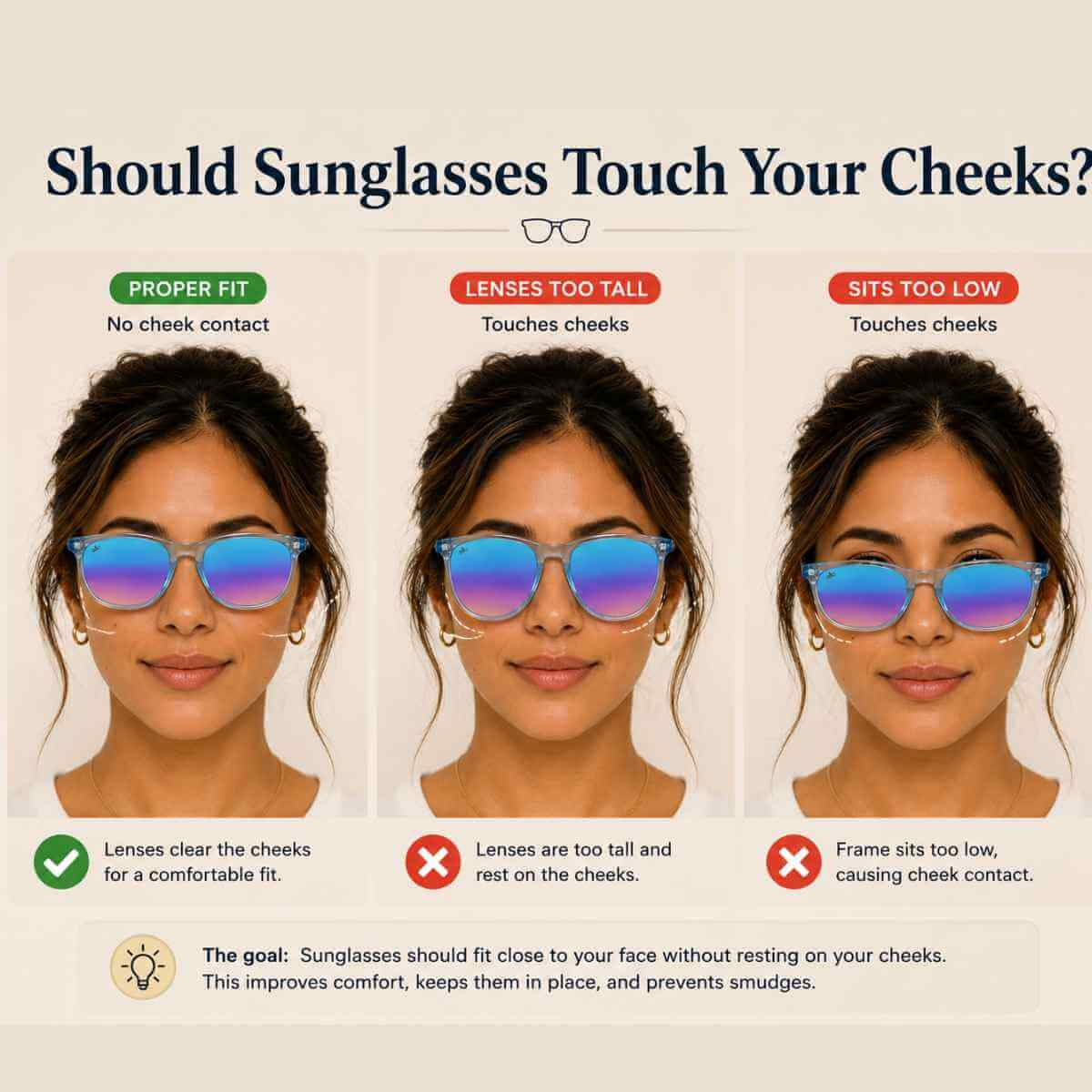
Most people pay close attention to lens color and frame style when buying sunglasses. Far fewer consider whether the frame was actually designed for the width and proportions of their face. That oversight can turn an otherwise great pair of sunglasses into something uncomfortable enough to leave at home.
For people with broader faces or larger heads, proper sizing is particularly important. Choosing a larger frame isn’t simply about appearance—it can influence comfort, stability, coverage, and how practical the sunglasses feel after several hours outdoors.
The Problem With Treating Sunglasses as One Size Fits All
Walk into almost any store selling sunglasses and you’ll see dozens of styles. Despite all that variety, many frames fall within a relatively narrow range of standard dimensions.
That works well for plenty of people. For others, it creates a frustrating cycle.
A frame may look good at first but begin pressing against the temples after an hour. The arms might bow outward because the frame is too narrow. Sunglasses can also sit differently than intended when they aren’t proportioned correctly for the wearer’s face.
People sometimes assume these issues are simply part of wearing sunglasses. They aren’t necessarily. In many cases, the problem is the size of the frame rather than sunglasses in general.
A properly proportioned pair should feel comfortable without excessive pressure and should sit naturally instead of appearing stretched across the face.
Signs Your Current Sunglasses May Be Too Small
Fit problems aren’t always obvious during a quick try-on. Wearing sunglasses for an entire afternoon can reveal issues that aren’t noticeable during the first few minutes.
Common signs that a frame may be undersized include:
- Noticeable pressure around the temples
- Arms that visibly spread outward when worn
- Discomfort behind the ears after extended use
- A frame that looks disproportionately narrow across the face
- Frequent adjustments to find a comfortable position
- Sunglasses that leave pronounced pressure marks
- Lenses that provide less side coverage than you would prefer
One symptom doesn’t automatically mean you need the largest frame available. Frame shape, bridge design, temple construction, and personal preferences also influence fit.
However, consistently encountering several of these problems is a good reason to explore larger sizing rather than repeatedly purchasing standard-width frames.
Bigger Frames Can Improve More Than Comfort
Comfort is the most immediate advantage of wearing properly sized eyewear, but it isn’t the only consideration.
Better Proportions
Frames generally look more balanced when their dimensions complement the wearer’s facial proportions. Someone with a broad face may find that a larger frame creates a more natural appearance than a narrow design.
The goal isn’t necessarily to make sunglasses look oversized. In fact, an XL frame on a larger face may look much like a standard frame does on someone with narrower proportions.
More Natural Temple Positioning
When a frame is too narrow, its arms can flare outward rather than extending naturally toward the ears. That creates pressure and can place unnecessary stress on the frame over time.
A wider design gives the temples more room to sit as intended.
Appropriate Coverage
Larger frames can also provide broader lens coverage. Depending on the design, this can be useful for people who spend significant time outdoors, although the exact amount of coverage varies considerably between frame styles.
For someone who has repeatedly struggled with conventional sizing, shopping specifically for extra large polarized sunglasses can therefore make more sense than simply choosing another standard frame and hoping it fits differently.
Consider Your Lifestyle Along With Frame Size
Once you’ve established that a larger frame is appropriate, the next step is considering what you actually do while wearing sunglasses.
A person who primarily wants sunglasses for commuting and weekend errands has different requirements from someone who fishes every Saturday.
For everyday wear, lightweight construction and versatile styling may be priorities. You might want something that feels equally appropriate while driving, walking around town, or spending an afternoon outside.
Fishing and boating place greater emphasis on managing reflected glare from the water. Polarized lenses can be particularly useful in environments where bright reflections are common.
Running, hiking, and other active pursuits add another variable: stability. A larger frame still needs to remain comfortably in position as you move. Wraparound shapes and other sport-oriented designs may provide a different fit from conventional lifestyle frames.
Outdoor work can involve entirely different requirements. When certified eye protection is necessary, ordinary sunglasses should not be assumed to meet workplace safety requirements. Look specifically for appropriate safety ratings for the task.
How to Shop for XL Sunglasses More Effectively
Finding a comfortable pair becomes easier when you shop systematically instead of choosing solely according to appearance.
Start with a pair of sunglasses you already own. If they fit reasonably well, check their dimensions where available and use them as a reference. If they’re clearly too narrow, those measurements can still provide a useful baseline for determining what needs to change.
Then consider these factors:
Frame Width
Overall width is particularly relevant for people with broader faces. Compare available measurements rather than assuming labels such as “large” and “XL” mean exactly the same thing across different brands.
Frame Shape
Two frames with similar dimensions can fit differently because of their shape. Rectangle, aviator, full-frame, and wraparound designs can each sit differently on the face.
Bridge Fit
Width isn’t the only dimension that matters. Pay attention to how the sunglasses rest on your nose. They shouldn’t constantly slide downward or sit in an awkward position simply because the overall frame is wide enough.
Temple Length and Pressure
Consider how the arms extend toward and around your ears. Comfort during extended wear is more important than how the sunglasses feel during a 30-second fitting.
Lens Features
After narrowing the search according to size, consider lens characteristics. Polarization can help reduce reflected glare, while appropriate UV protection remains an important feature for sunglasses intended for regular outdoor use.
Avoid Assuming That XL Means Bulky
Some shoppers hesitate to consider larger sunglasses because they picture oversized, heavy frames. But XL refers primarily to fit and dimensions rather than one particular aesthetic.
Larger sunglasses can come in numerous shapes and styles. A person might prefer a classic rectangular frame, an aviator-inspired look, a sport-oriented wraparound design, or something intended primarily for casual everyday wear.
This variety matters because people shouldn’t have to choose between proper sizing and personal style.
Instead of asking whether a frame looks “too large” in isolation, consider whether its proportions look natural when you’re actually wearing it. A frame that appears large on a shelf may look perfectly balanced on a broader face.
Comfort Becomes Even More Important Over Time
The difference between an adequate fit and a genuinely comfortable one becomes increasingly noticeable the longer sunglasses are worn.
A little pressure at the temples may seem insignificant during a short drive. After several hours at the beach, on a fishing trip, at an outdoor event, or exploring a new city, that same pressure can become distracting.
This is why long-term comfort deserves as much consideration as style.
Sunglasses are most useful when wearing them doesn’t require much thought. Ideally, they should stay comfortably in place while you focus on whatever brought you outside in the first place.
Conclusion
Buying sunglasses shouldn’t require squeezing into a frame designed for someone else’s proportions. People with broader faces have different sizing needs, and recognizing that can dramatically simplify the shopping process.
Start by identifying the problems you’ve experienced with previous frames. Pay attention to width, temple position, bridge fit, lens coverage, and comfort over extended periods. From there, match the frame and lens characteristics to the activities where you’ll use them most.
The most stylish sunglasses in the world aren’t particularly useful if they’re uncomfortable after an hour. Choosing eyewear designed around your actual proportions can provide a more balanced combination of comfort, appearance, and everyday practicality—and make finding a pair you genuinely enjoy wearing much easier.
