

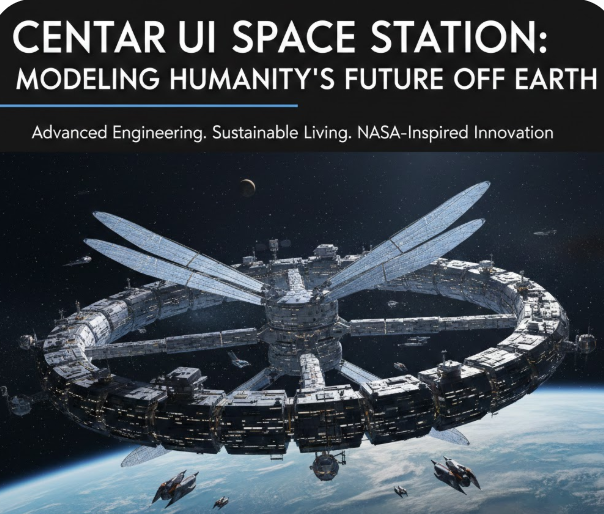
Space exploration has shifted dramatically from short missions and satellites to thinking about long-term human presence off Earth. At the forefront of this shift is the concept of the centauri space station — a model for future space habitats that combines advanced engineering, sustainable energy systems, and technology inspired by NASA’s space innovations. This type of station isn’t just imagined by scientists; organizations are developing real technologies designed to support life and research beyond Earth’s atmosphere.
2. The Vision of Space Habitats
Conceptual space stations have evolved from simple orbiting laboratories into complex habitats capable of sustaining crews for extended periods. The centauri space station model represents this evolution — a structure engineered to thrive not just in low Earth orbit but potentially farther out near the Moon, Mars, or deep space. What makes this model revolutionary isn’t just its size, but its energy and systems architecture that supports human life, research, and even commercial operations in space environments where traditional Earth-based infrastructure can’t exist.
3. Powering the Centauri Space Station
A critical challenge for space habitats is creating sustainable, long-lasting power systems. The centauri space station model integrates advanced solar energy technologies that are engineered specifically for the harsh conditions of space. These high-efficiency solar arrays are lightweight, radiation-tolerant, and optimized to capture abundant solar energy where Earth’s atmosphere doesn’t filter sunlight.
These advanced solar panels are designed to power crucial systems aboard the station — from life support and communications to scientific labs — while minimizing weight and space requirements. The modular design also allows solar arrays to expand as the station grows or changes mission focus.
4. Engineering for the Harshness of Space
The environment beyond Earth is unforgiving. Space structures must withstand intense radiation, dramatic temperature swings, and vacuum conditions. Engineering systems for the centauri space station model focus on resilience under these extremes. One key innovation is radiation-hardened technology — power and structural systems are built to resist radiation degradation, ensuring long-term functionality without frequent maintenance or replacement.
Temperature resilience is also crucial. Systems must operate efficiently in both extreme heat and cold without degrading, a challenge that the station’s energy storage and hardware components are designed to meet.
5. Life Support and Daily Operations
Reliable energy is essential for life support and daily operations aboard any space habitat. The centauri space station model’s advanced power systems ensure that life-critical systems run smoothly:
- Air Filtration and Environmental Control: Maintaining breathable air and safe temperatures depends on stable energy.
- Water Purification and Recycling: These systems require consistent power to ensure clean, usable water for the crew.
- Scientific Research Infrastructure: Stable electricity ensures research labs and experimental equipment can operate without interruption.
These integrated systems make long-duration missions safer and more manageable, enabling astronauts to live and work in space more comfortably.
6. Scalability and Adaptability
One of the most exciting features of the centauri space station model is its modular design. Unlike fixed structures, this habitat can grow and adapt to new missions. The scalable systems allow additional modules to be added for expanded living quarters, laboratories, industrial use, or commercial operations — similar to how modern modular spacecraft are assembled.
This adaptability means that as mission requirements evolve — from research to commercial tourism or deep space exploration — the station can expand its capabilities without complete redesign.
7. Sustainability: The Future of Space Exploration
Sustainability in space infrastructures is no longer optional — it’s essential. The centauri space station model prioritizes systems that deliver reliable power with minimal maintenance, supporting life, science, and potentially economic activities far from Earth.
These systems aren’t just theoretical. Centauri’s approach, with solar and energy storage solutions designed specifically for space habitats, aligns with projected needs for future space colonies and outposts on the Moon or Mars.
8. Conclusion
The centauri space station is more than a concept — it embodies how engineering is evolving to make life beyond Earth possible. By leveraging advanced solar technologies, resilient power storage, and modular design, this space habitat model points toward a future where humans don’t just visit space — we live there.
