

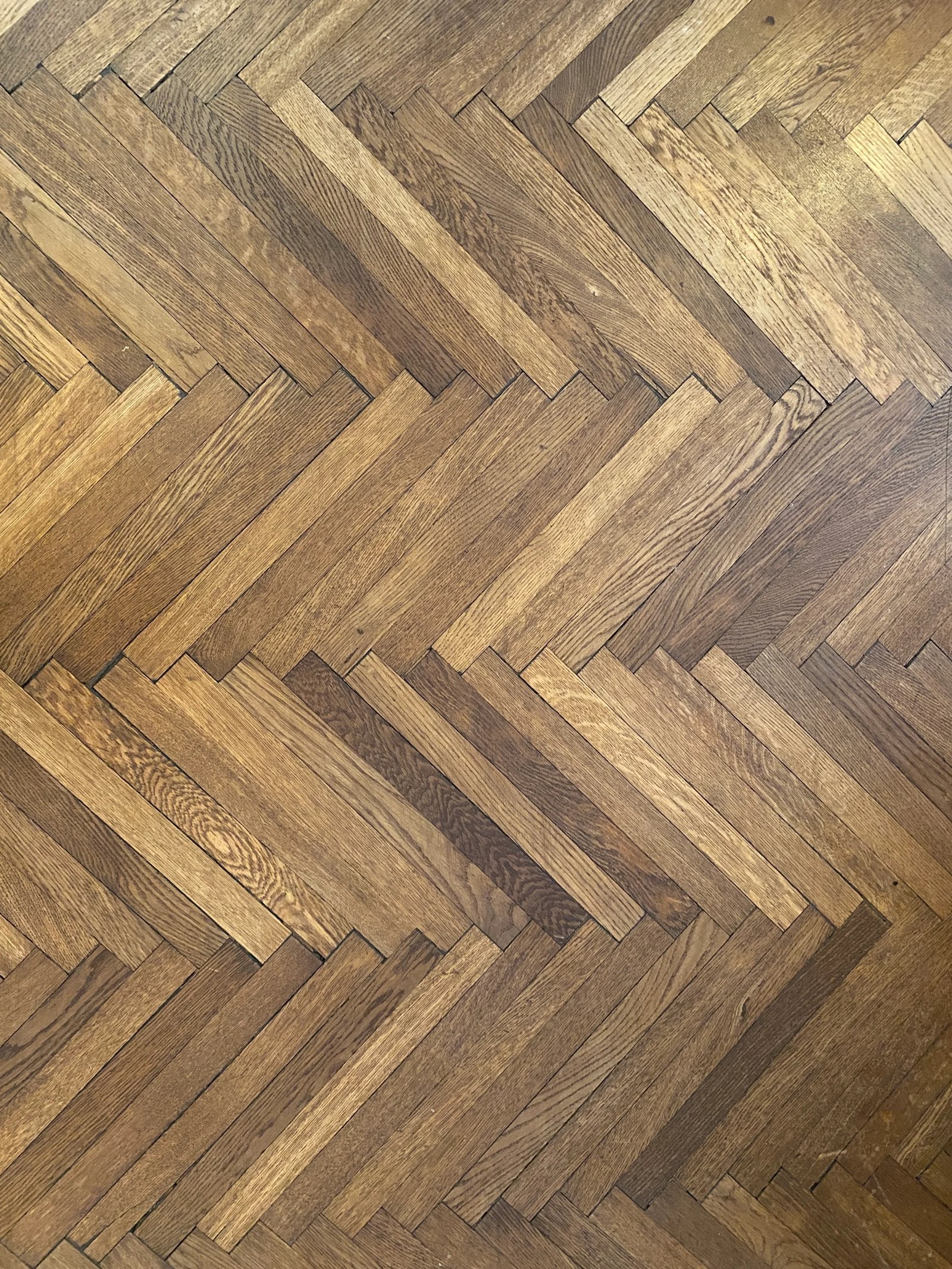
Parquet has decorated grand homes for centuries, from Versailles ballrooms to Victorian terraces, and its appeal has never really faded. What has changed is the material. Modern stone plastic composite boards reproduce the geometry of traditional parquet in a rigid, waterproof format that suits busy contemporary homes far better than delicate timber blocks ever could.
The attraction of Spc parquet flooring is the combination of pattern and practicality. You get the visual richness of herringbone or chevron layouts with a click-lock installation, a wear layer that shrugs off daily life, and none of the sanding, sealing, or moisture anxiety that comes with real wood blocks.
Herringbone: the timeless favourite
Herringbone is laid in a broken zigzag, with the end of one plank meeting the side of the next at a right angle. The effect is dynamic without being fussy, and it suits both period properties and clean modern interiors. In hallways it draws the eye forward and makes the space feel longer; in living rooms it gives a large floor the structure it needs so the room does not feel like an empty expanse.
Because the pattern is busy by nature, herringbone works best with calm walls and simple furniture lines. Let the floor be the statement. Smaller planks intensify the pattern and suit compact rooms, while larger formats calm the effect in open-plan spaces where too much zigzag could feel restless.
Chevron: the sharper, tailored look
Chevron planks are cut at an angle so they meet in a perfect point, creating a continuous arrow-like flow across the floor. The result looks more formal and architectural than herringbone, and it is a favourite in entrance halls, dining rooms, and boutique-style bedrooms. Chevron reads as deliberate design, so it pairs well with panelled walls, statement lighting, and restrained colour palettes.
Basket weave and brick patterns
Not every parquet layout zigzags. Basket weave alternates small groups of planks to imitate woven strands, giving a softer, more traditional rhythm that suits kitchens and country-style homes. A simple brick or block pattern, where short planks are laid in offset rows, offers a quieter route into parquet character and is often the easiest pattern to install and to live with in smaller rooms.
Why the SPC core suits patterned floors
Patterned floors punish movement. Gaps that would go unnoticed in a straight plank floor break the geometry of herringbone immediately. The rigid stone composite core of SPC is dimensionally stable, resisting the expansion and contraction that temperature and humidity changes cause in softer materials. That stability keeps points aligned and joints tight, which is exactly what intricate layouts need to keep looking crisp year after year.
Water resistance is the other quiet advantage. Traditional parquet in a kitchen or hallway lives in fear of spills and wet shoes, while Spc parquet flooring can be mopped without worry and handles entrance areas, family bathrooms, and kitchen diners with confidence. For homes with children and dogs, that freedom changes parquet from a precious surface into an everyday one.
Colour choices within the pattern
Natural oak tones remain the most versatile choice, warming both modern and traditional rooms. Smoked and walnut shades bring depth and suit dining rooms and studies, while pale, limed finishes brighten north-facing spaces and smaller flats. Whichever tone you pick, order a generous sample area and lay the pattern out properly, because a single plank never shows how the geometry will dance across a whole room.
Installation: where patterns succeed or fail
Patterned flooring rewards careful planning. The layout should be centred on the room's main sightline, usually the view from the doorway, so the design looks intentional rather than accidental. Installers often dry-lay the first rows to check how the pattern meets each wall, because a sliver of pattern stranded along one skirting board can spoil the effect of the whole floor. With click-lock SPC boards the fitting is cleaner and faster than traditional glued blocks, but the geometry still deserves the same respect.
Direction is another decision with real consequences. Running herringbone along the longest dimension of a room stretches the space visually, while turning it across a wide room can make the area feel broader and calmer. In open-plan homes, keeping one pattern and direction flowing through connected spaces creates a sense of unity that separate floors in each zone can never achieve.
Borders and finishing touches
Traditional parquet often used a border of straight planks to frame the pattern, and the idea translates beautifully to modern boards. A simple border settles the pattern, gives the eye a rest at the edges, and provides a neat solution where the pattern would otherwise collide with fireplaces, bay windows, or kitchen units. Matching thresholds and careful skirting complete the picture, turning a practical floor into something that looks genuinely bespoke.
Parquet pattern is a long-term commitment, so choose the layout that suits the architecture of your home rather than chasing a passing trend. Herringbone for timeless movement, chevron for tailored formality, basket weave for softness: each has its place. Built on a stable modern core, the pattern you choose today should still look deliberate and handsome a decade from now.
