

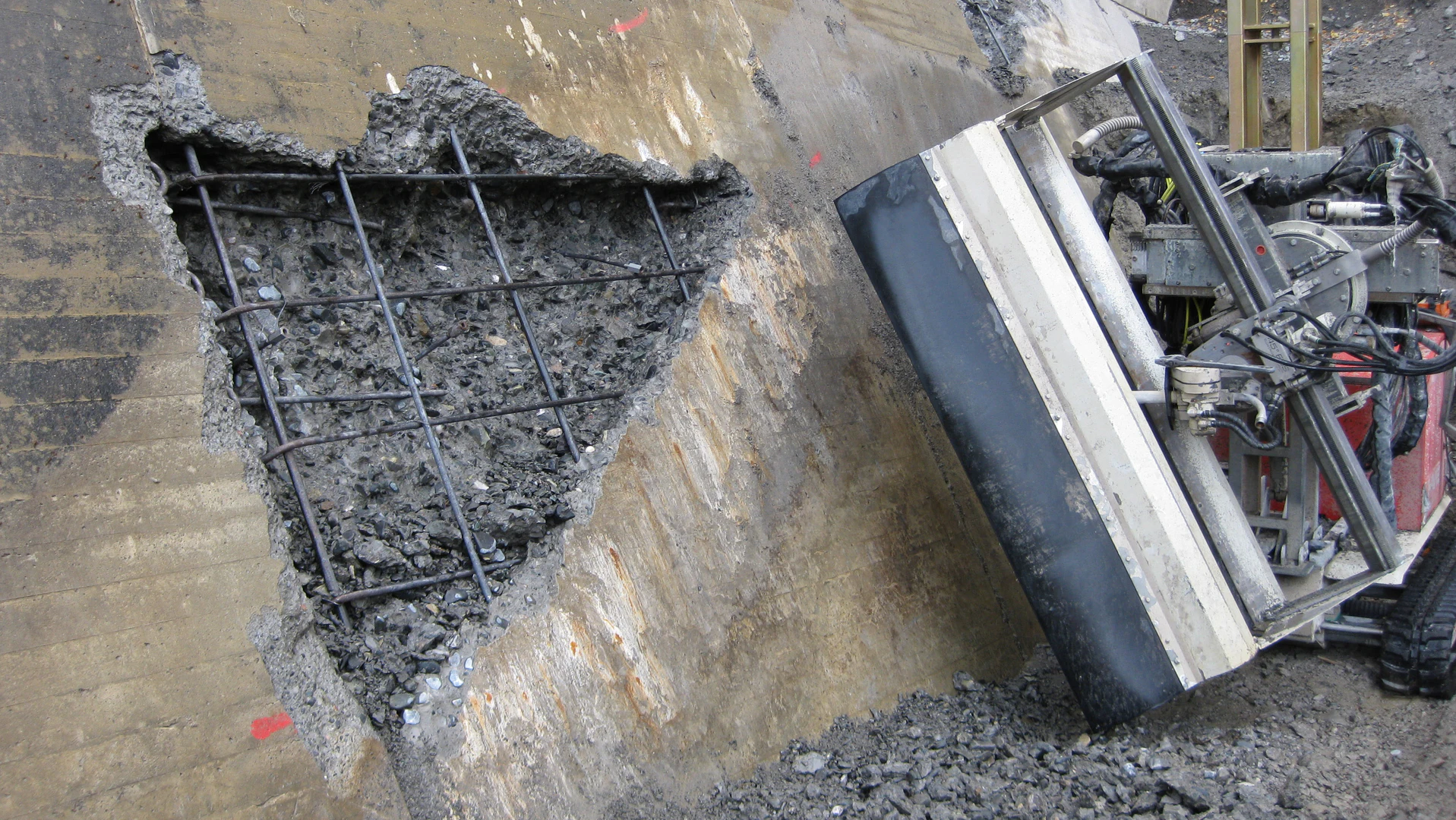
Concrete repair is one of those jobs where the method you choose matters just as much as the crew you hire. Traditional jackhammering can micro-fracture the surrounding concrete, weaken rebar bonds, and leave a repair surface that fails faster than it should. That’s why more contractors and facility owners are turning to hydrodemolition — a high-pressure water process that removes deteriorated concrete while leaving sound concrete and reinforcing steel intact. But the technique is only as good as the team running it. Here’s what to look for when evaluating hydrodemolition companies for your next project.
1. Proven Experience with Similar Projects
Not all hydrodemolition jobs are the same. Removing a thin layer of deteriorated concrete on a parking deck is very different from selective demolition on a bridge deck over an active waterway, or surface prep on a dam spillway. Ask potential contractors for examples of projects similar in scope, substrate, and environment to yours. Experienced hydrodemolition companies will have a portfolio of case studies, references, and site photos that demonstrate they’ve handled comparable challenges — not just a general claim of capability.
2. Equipment Quality and Capabilities
Hydrodemolition relies on robotic or semi-robotic units that deliver ultra-high-pressure water (often 10,000–20,000+ PSI) in a controlled, programmable pattern. The quality, calibration, and maintenance of that equipment directly affects the precision of the demolition depth and the consistency of the finished surface. Ask about the specific equipment the company uses, how it’s maintained, and whether they have backup units available in case of mechanical issues — downtime on a scheduled project can be costly.
3. Understanding of Concrete Removal Depth Control
One of hydrodemolition’s biggest advantages is selective removal — taking out only the deteriorated or chloride-contaminated concrete while preserving sound material and existing rebar. This requires real technical skill in calibrating water pressure, nozzle distance, and pass speed. A company that can demonstrate precise depth control (and explain how they verify it, such as through chain-drag testing or coring) is signaling a higher level of process maturity.
4. Environmental and Site Management Practices
Hydrodemolition generates a slurry of water, concrete debris, and sometimes contaminants that must be captured, contained, and disposed of properly. This is especially critical on projects near waterways, in urban environments, or on sites with strict environmental permits. Ask how the company manages runoff, water recycling, and debris disposal, and whether they’re familiar with local environmental regulations for your project’s location.
5. Safety Record and Certifications
High-pressure water systems carry real safety risks, both to workers and to the public if the site isn’t properly managed. Look for companies with strong OSHA compliance records, documented safety training programs, and relevant industry certifications. A company’s safety culture is often a good proxy for its overall operational discipline.
6. Project Management and Communication
Hydrodemolition projects, especially on infrastructure like bridges, parking structures, or industrial facilities, often need to be coordinated around traffic control, facility operations, or public access restrictions. The contractor’s ability to plan logistics, communicate timelines clearly, and adapt to on-site conditions can make or break a project schedule. Ask how they handle project updates, unexpected findings (like more extensive deterioration than initially scoped), and coordination with other trades.
7. Cost Transparency and Value, Not Just Price
Hydrodemolition often costs more upfront than mechanical demolition methods, but it typically pays off through reduced repair area, stronger bond strength for new concrete, and longer-lasting repairs. When comparing quotes, look past the bottom-line number and ask what’s included: mobilization, water treatment, debris removal, surface preparation, and any warranty on workmanship.
Why Experience Matters Most
Of all these factors, experience tends to be the differentiator that ties everything else together. Experienced hydrodemolition companies bring calibrated judgment to depth control, know how to troubleshoot unexpected site conditions, and typically have better-maintained equipment and more disciplined safety practices simply because they’ve refined their processes across dozens of projects. When in doubt, prioritize a contractor’s track record and ability to show real results over a lower bid from an unproven crew.
Final Thoughts
Choosing the right hydrodemolition company is about more than comparing quotes — it’s about finding a team with the technical expertise, equipment, and process discipline to deliver a repair that actually lasts. Take the time to vet experience, ask detailed technical questions, and check references before committing. The upfront diligence pays off in a repair that performs for years, not just one that looks good on completion day.
