

Farmers markets across the United States have grown steadily in number and in commercial weight. According to the USDA Agricultural Marketing Service, there are now thousands of registered farmers markets operating nationwide, and competition among vendors at these markets has intensified accordingly. For vegetable growers and produce vendors, the physical display is no longer a secondary concern — it is often the deciding factor between a shopper pausing at your table or walking past entirely.
What makes this worth addressing carefully is that most vendors underestimate how much their setup communicates before a single word is exchanged. The way vegetables are arranged, how visible they are from a distance, and how easy they are to access all influence whether a shopper feels comfortable enough to stop, pick something up, and eventually buy. This guide works through the operational and practical decisions involved in setting up an outdoor produce display that performs consistently across market days, weather conditions, and varying foot traffic patterns.
Choosing the Right Display Structure for an Outdoor Environment
An outdoor vegetable display rack is not simply a shelf you move from indoors to a market stall. The outdoor environment introduces variables that affect both the produce itself and the stability of the structure holding it. Wind, direct sunlight, uneven pavement or grass, and the need to pack up and rebuild weekly all create requirements that indoor shelving simply was not designed to handle. Choosing a structure built for outdoor produce display — such as a purpose-designed outdoor vegetable display rack — eliminates much of the frustration that comes from improvising with equipment meant for other contexts.
Structural Stability on Uneven Ground
Farmers market venues often occupy parking lots, park grounds, or street sections where the surface is not perfectly level. A display structure that wobbles or shifts during a busy market morning creates real safety concerns and damages the professional appearance of your stall. Structures with adjustable feet or wide base frames handle uneven surfaces more reliably than those with fixed, narrow legs. The priority is not aesthetics — it is preventing a loaded display from tipping when a customer reaches for produce at the edge of a shelf or when wind catches the canopy above.
Portability and Rebuild Time
Vendors who attend markets weekly quickly learn that setup and breakdown time directly affects profitability. An hour spent assembling a complicated structure at 6 AM, in low light, is an hour not spent organizing product or preparing signage. Display systems that fold flat, require no tools, and can be rebuilt by one person in a short window reduce that operational burden meaningfully. When evaluating structures, it is worth thinking not just about how the display looks when complete, but how reliably it can be assembled under real conditions — early mornings, partial staff, or after a difficult drive.
Organizing Produce for Visibility and Reach
The arrangement of vegetables within a display structure follows principles that are partly visual and partly practical. Shoppers at farmers markets tend to make decisions quickly, especially during busy periods. If produce is difficult to see, stacked too densely to handle, or placed at heights that feel uncomfortable to reach, many shoppers will simply move on rather than work around the inconvenience. Effective organization reduces that friction without requiring elaborate presentation skills.
Tiered Layouts and Sightlines
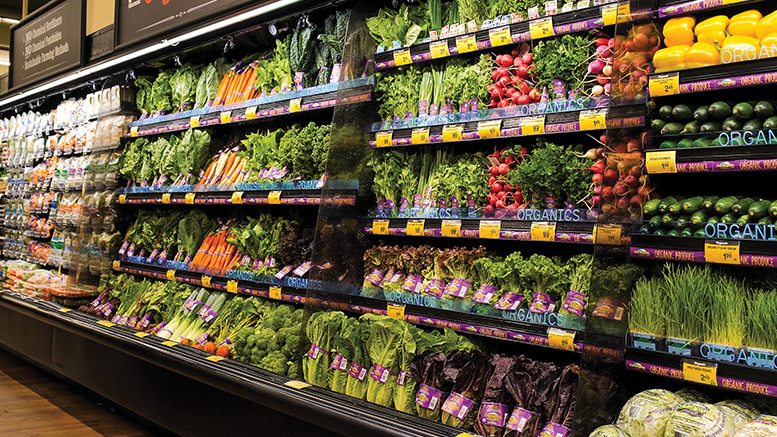
A tiered display — where product at the back sits higher than product at the front — allows shoppers to see everything available without needing to lean over or lift items to look beneath them. This is particularly useful for smaller vegetables and root crops that tend to disappear when placed flat on a single surface. The goal is not to create a theatrical presentation, but to ensure that every item is visible from the front of the stall at a normal standing height. Produce that cannot be seen from the customer’s natural vantage point is produce that will not sell at its potential rate.
Grouping by Type and Use
Grouping similar vegetables together — leafy greens in one section, root vegetables in another, herbs separate — makes the display easier to scan and reduces the time a shopper needs to locate what they are looking for. It also supports incidental purchases: a customer who came for tomatoes and spots peppers and onions grouped nearby may add them to their basket because the logical connection between the items is already made visually. This kind of arrangement does not require design expertise. It requires consistent application of a simple organizational principle.
Managing Produce Quality Throughout the Market Day
One of the practical realities of outdoor produce selling is that vegetables begin to show the effects of heat, handling, and time well before the market day ends. A display that looked strong at opening can appear wilted, disorganized, or depleted by mid-morning if no system is in place to manage it. Quality control throughout the day is as important to conversion as the initial setup.
Rotation and Restocking Discipline
Keeping older product at the front and fresher stock behind — a practice common in retail — applies directly to farmers market displays. It ensures that what is visible to shoppers remains at peak presentation, and it reduces the risk of unsold produce deteriorating at the back of a display unnoticed. Designating a restocking schedule, even loosely, helps vendors stay ahead of the gradual decline that happens when displays are left unattended during busy periods.
Handling Heat and Direct Sunlight
Sunlight and heat affect different vegetables differently. Leafy greens can wilt quickly when exposed to direct afternoon sun, while root vegetables and squash handle heat more tolerably. Positioning the most heat-sensitive produce in shaded areas of the stall, or using light fabric covers during peak sun hours, extends the visual quality of the display through the full market window. A vendor who arrives with excellent product but allows it to degrade visually by late morning loses the sales that should have been available in that second and third hour of trading.
Signage and Pricing as Functional Display Elements
Signage at a farmers market stall functions differently than signage in a retail store. Shoppers at outdoor markets are often moving through a crowded space, making quick decisions, and managing baskets or carts. Clear, legible pricing placed directly with — or above — each product removes a friction point that causes many shoppers to hesitate or walk away. According to research summarized by the USDA Agricultural Marketing Service, vendors who make pricing and product information immediately visible tend to report higher transaction volumes and shorter decision times at point of purchase.
Placement and Legibility
Price signs placed flat on a surface beneath produce are difficult to read when a display is full. Signs angled toward the customer, positioned above or at the front edge of each product group, communicate information without requiring the shopper to handle anything or ask a question. The font and size matter less than the angle and placement. A handwritten sign at the right position will outperform a printed sign that is obscured by product or facing the wrong direction.
Using Signage to Communicate Provenance
Farmers market shoppers often choose these venues specifically because they want to know where their food comes from. A simple sign indicating the farm name or general growing location satisfies that expectation without requiring a conversation. Vendors who integrate this information into their standard signage — rather than relying on verbal explanation — make that communication available to every shopper, including those who prefer to browse without engaging directly.
Setting Up Your Stall Layout for Foot Traffic Flow
The physical layout of a market stall determines how many people can engage with a display at the same time. A setup that funnels all traffic to a single point creates congestion during busy periods and discourages shoppers from entering when the space appears crowded. A layout that allows multiple people to browse simultaneously — with clear entry and exit paths — keeps shoppers in the stall longer and increases the probability of purchase.
Open Versus Closed Configurations
A closed configuration — where the vendor stands behind a table and the display faces forward — is common but limits engagement. An open or U-shaped configuration, where the display wraps around the edges of the stall space, invites shoppers to enter and browse from multiple sides. This is not always possible given stall size constraints, but even partial openness at one end of a display improves traffic flow and makes the stall feel more accessible.
Managing Vendor Positioning
Where the vendor stands matters as much as where the display is positioned. Standing at the end or side of the stall — rather than directly in front of it — keeps the product visible and avoids creating a social barrier that some shoppers find discouraging. Vendors who position themselves to assist rather than intercept tend to create a more comfortable browsing experience, particularly for first-time visitors to their stall.
Conclusion
Setting up a high-performing outdoor vegetable display at a farmers market is a practical and repeatable process once the core decisions are made well. The choice of structure, the organization of produce, the management of quality across the market day, clear signage, and a layout that accommodates real foot traffic patterns all work together to produce consistent results. None of these elements require significant capital investment or specialized expertise. They require attention to how shoppers actually move through and interact with an outdoor market environment, and a commitment to applying the same standards each week rather than improvising on the day.
Vendors who treat their display setup as an operational system — something to be refined over time based on what works — will find that the investment in getting it right early pays off across every market season that follows. The vegetable display is often the first and strongest signal a shopper receives about a vendor’s reliability and care, and it deserves the same deliberate attention as the growing process itself.