

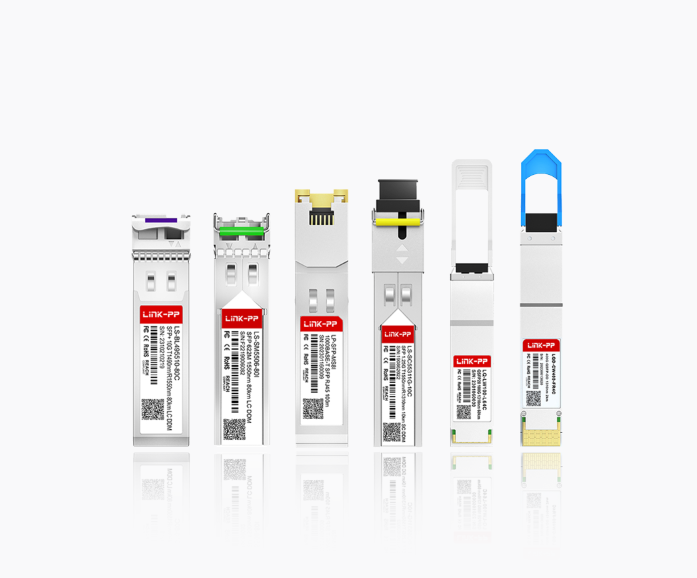
The Fiber Scarcity Problem in Expanding Networks
Network expansion does not always happen in places where infrastructure is abundant. Many data centers today sit in locations where fiber routes were built years ago, sometimes decades ago. At that time, nobody expected the explosive growth of cloud services, AI workloads, and distributed applications.
As a result, many existing fiber routes are now close to capacity.
Operators face a familiar problem. Traffic continues to grow, but the number of available fiber strands does not. Installing new fiber sounds simple in theory, yet in real environments it can involve construction permits, underground duct access, coordination with multiple property owners, and significant cost.
In metropolitan areas the situation can be even more complicated. Fiber pathways may run through crowded utility corridors where expansion is extremely difficult.
This is exactly the type of scenario where 100G QSFP28 80km BiDi optical modules start to attract attention. Rather than requiring two fibers for a single 100G connection, these modules allow data to travel in both directions over a single strand of single-mode fiber.
For networks running out of fiber capacity, that change can be surprisingly valuable.
Understanding the Role of BiDi Transmission in 100G Links
Traditional optical Ethernet links separate transmit and receive traffic physically. One fiber carries outgoing data, while another fiber carries incoming traffic. This approach works well when fiber is plentiful.
However, it also means that every new link consumes a full fiber pair.
BiDi optics approach the problem differently. Instead of separating traffic by fiber, they separate it by wavelength. Each direction uses a different optical wavelength, and both signals travel along the same fiber strand at the same time.
Inside the module, optical filters and receivers separate these wavelengths again so the network device can process the signals normally.
From the perspective of the switch interface, nothing unusual is happening. The Ethernet link appears just like any other 100G connection.
The difference exists only at the physical transmission level.
That small change can dramatically increase how efficiently fiber infrastructure is used.
Why the 80km Reach Matters
Short-reach optical modules are widely used inside data centers, but long-distance connectivity introduces a different set of requirements. Facilities located across a city—or even across regional industrial zones—may be separated by tens of kilometers.
An 80-kilometer optical reach covers many metropolitan network scenarios.
Organizations often deploy multiple data centers for redundancy and disaster recovery. These facilities must exchange data continuously so that applications remain synchronized. Database replication, backup transfers, and distributed computing all depend on stable long-distance connections.
Using 100G 80km BiDi modules allows these sites to communicate directly over existing fiber routes without relying on complex optical transport platforms.
This direct connection can simplify architecture and reduce latency between sites.
In distributed computing environments, even small reductions in network delay can improve application performance.
Real-World Deployment Environments
One place where 80km BiDi modules frequently appear is in metropolitan data center interconnection. Companies that operate several facilities within a single region often build private fiber links between them.
These links support workload balancing, data replication, and failover operations. When one facility experiences an issue, another location can quickly take over.
Another scenario involves telecom aggregation networks. Service providers often connect regional switching nodes using high-capacity optical links. Traffic from many access networks converges at these aggregation points.
Using BiDi modules allows providers to increase capacity without expanding fiber routes.
Research networks also benefit from long-distance 100G optics. Universities and research laboratories sometimes operate computing clusters in separate buildings or campuses. These environments transfer large datasets for scientific analysis, which requires reliable high-bandwidth connections.
BiDi modules help maintain these links while minimizing fiber consumption.
Operational Simplicity Compared with Complex Optical Systems
Long-distance transmission can sometimes require sophisticated optical transport equipment. Systems like dense wavelength division multiplexing (DWDM) allow many wavelengths to share a single fiber, but they also introduce additional hardware and configuration steps.
For some networks, that level of complexity is unnecessary.
100G QSFP28 80km BiDi modules provide a simpler alternative. They plug directly into standard QSFP28 switch ports and operate as normal Ethernet interfaces.
Network engineers configure them just like any other optical module.
This simplicity makes them attractive for organizations that want long-distance connectivity without deploying specialized optical transport platforms.
In many deployments, installation involves little more than inserting the module and connecting the fiber.
Once the link comes online, monitoring systems track optical parameters such as transmit power, receive power, temperature, and voltage.
These diagnostics help operators verify that the connection remains stable over time.
Challenges Engineers Need to Consider
Despite their advantages, 80km BiDi modules require careful planning.
Long-distance fiber links must be evaluated for attenuation and connector losses. Each splice point or patch panel adds a small amount of signal loss, which can accumulate across long routes.
Engineers typically perform a link budget calculation before deployment to ensure the optical signal will remain within acceptable limits.
Fiber quality also matters. Older infrastructure may include sections of fiber that introduce higher attenuation, which could affect performance over long distances.
Cost is another factor. Long-reach optical modules include more advanced components than short-distance optics, which increases their price. Networks must weigh this cost against the expense of installing new fiber routes.
In many cases, using BiDi modules is still far more economical than deploying new infrastructure.
The Role of BiDi Optics in Future Networks
As digital infrastructure continues to expand, networks are becoming more geographically distributed. Applications run across multiple facilities rather than a single centralized data center.
Artificial intelligence training clusters, large-scale cloud systems, and distributed storage platforms all depend on high-capacity interconnections between sites.
These trends are likely to increase demand for efficient long-distance optical solutions.
Technologies like 100G QSFP28 80km BiDi optics demonstrate how optical engineering can adapt to real-world constraints such as limited fiber resources.
Future generations of optical modules may extend these ideas further by supporting higher speeds or longer distances while still minimizing infrastructure requirements.
Conclusion
100G QSFP28 80km BiDi optical modules provide an effective way to deliver high-bandwidth connectivity across long distances while using minimal fiber resources. By enabling bidirectional transmission on a single strand of single-mode fiber, these modules help networks expand capacity even when fiber infrastructure is limited. Their combination of long reach, efficient fiber usage, and straightforward deployment makes them well suited for metropolitan data center interconnection, telecom aggregation networks, and distributed computing environments. As organizations continue building geographically distributed digital infrastructure, solutions like BiDi optics will remain an important part of scalable network design.
